
After a short break from road trips in April, Light IT Global’s team got back at it in May. The last month of spring had two dates marked down: May 20th — the first day of Infoshare — and May 27th, kicking off the Health Revolution Congress. Our VP of Sales & IT Services, Denis Kovalenko, and VP of Digital Transformation, Anton Dobrodytskyi participated in both events and got back with a bunch of great insights!
So, if you somehow missed one or both of the conferences IT Europe had to offer in May, fear not! This article is exactly what you need!
Infoshare: AI vs Humans, Lifelong Learning, and Cybersecurity
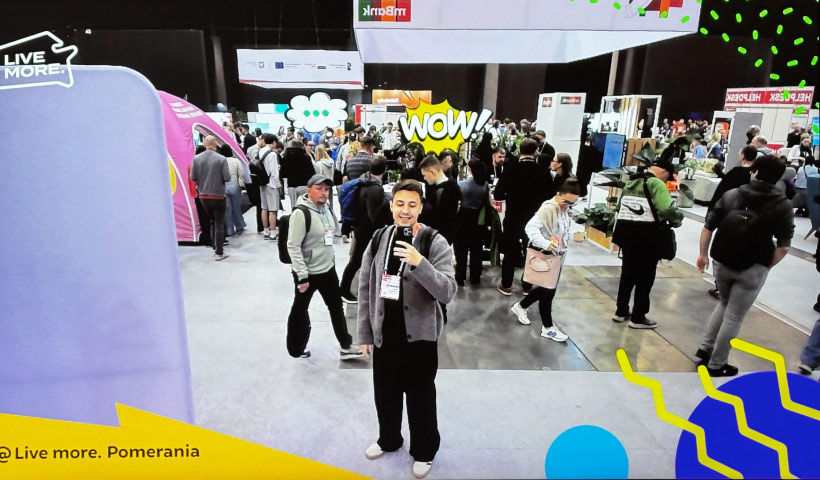
This year, Light IT Global attended Infoshare for the first time. Although a large part of our team relocated to Poland after the full-scale Russian invasion began, we haven’t had a chance to really dive into the local IT community until now. And we have to say, it was long overdue! Polish IT scene turned out to be super dynamic, deep, and focused on problem solving, as one of the speakers said it beautifully: “Where innovation happens, people have better lives.”
Infoshare 2026 Snapshot:
- ~100 panels
- +6000 attendees
- 160 speakers
- 7 thematic stages
So what was discussed during a two-day event in Gdansk? We’re ready to share!
AI Is a Given. What Do We Do Next?
Artificial Intelligence has been a central topic of every IT conference for about a decade now, and Infoshare didn’t become an exception. But what’s interesting is that the main POV wasn’t exactly expected. Speakers mostly focused not on bright pilots and promising presentations (even though those were there too) but on how modern society seems to be unprepared for such a rapid technological advancement.

The topics discussed on the AI & Architecture Stage were both inspiring and thought-provoking. Like, how should we prepare for an inevitable change in the workforce once the majority of Gen X and Millennials retire, and it consists of Gen Z and Gen Alpha — generations who don’t know what it's like to work without AI?
Or how in the era of rising AI, the ability to learn and adapt literally became the most valuable skill a person can have?
During the panel “I don't know, but I'll find out - LifeLong Learning as a response to the challenges of the future,” Paweł Nowakowski, Klaudia Zagórowicz, Sebastian Wilczewski, and Patryk Jar discussed a very important question of changing workforce requirements and how it influences not just the labor market but the education system and entrepreneurship. Turns out, in 2026, the concept of lifelong learning is not a term from self-help books, and not a “nice-to-have” activity from which you can opt out any time you want. Today, it’s almost mandatory to keep yourself relevant in the job market, and 100% mandatory if you want to participate in innovation.
In a way, adding fuel to the fire, Aleksandra Kunysz, during her presentation “It's not AI that's your biggest threat, it's working under constant overload,” highlighted how the rapidly changing tech world and the dominance of AI force people to subconsciously narrow down their perspective, making it difficult to assess risk, and taking away clarity in general.
To sum things up, this year Infohare’s take on AI wasn’t so much the foretaste of the upcoming revolutionary changes caused by AI but rather the calmer, more realistic approach that simultaneously understands the benefits of AI yet still prioritizes human craft, intelligence, and well-being above all else.
Surprisingly, AI turned out to be discussed even during panels that weren’t directly related to tech trends or state-of-the-art innovations. One of the best examples of it is Cybersecurity, which was central to the event this year.
Multiple sessions focused on things like:
- AI agents with excessive permissions
- AI-generated code security
- AI hacking techniques
- Agentic systems behaving unpredictably
- Security implications of autonomous workflows
Such a strong awareness is the best indicator of the businesses’ desire to move from “How do we get ourselves AI?” to “How do we control AI once we have it?” And frankly, we feel this question is here to stay for quite some time. “The biggest cybersecurity challenge of the next few years may be controlling what our own AI systems are allowed to do once they become powerful enough to act on our behalf.”
Besides AI-driven cyber threats, the words on everyone’s lips were IAM, permission systems, zero-trust frameworks, and a secure-by-design approach. As you may guess, speakers at Infoshare place emphasis not only on personal data and identity protection but also on building resilience within organizations. At the same time, the idea of preventing cyber threats and cyber attacks completely was obviously deemed unrealistic, highlighting the importance of preparedness and accountability on the company level for each business. A very grounded and healthy take we must say!
Now let’s move from beautiful Gdansk to stunning Barcelona — home of Health Revolution Congress 2026!
Health Revolution Congress: The Rocky Road From Innovation to Adoption
If there was one idea connecting the dozens of discussions, panels, and networking conversations at Health Revolution Congress 2026, it was the unanimous agreement on the necessity of moving from mass innovation adoption to real-world integration. Many speakers, as well as participants, our team had a chance to talk to highlighted the fact that medical facilities, patients, investors, and regulators alike acknowledge the fact that technologies like AI, IOT, digital therapeutics, remote monitoring, and predictive analytics are a part of the healthcare workflow now, and everyone is expecting them to bring value, yet the clash between innovative approaches and conservative practices isn’t going anywhere. The main reasons for that are:
- Strict healthcare regulations
- High complexity and interdependence of medical processes
- The necessity to constantly balance technology with human judgment
- Massive costs of the workflow changes
So, where does the industry go from there? Obviously, every healthcare provider finds its own ways to streamline innovation adoption, but every player in the industry seems to recognize the need for a universal regulation framework within the EU to make the process easier for everyone involved.

There is a subtle shift from framing healthcare regulations as a barrier for state-of-the-art technology to viewing it as an enabler. Many speakers at HRC 2026 argued that effective governance helps healthcare technologies to scale safely and sustainably. This perspective was especially visible in conversations about AI, where compliance and accountability were seen as necessary foundations for building trust and achieving long-term impact.
Artificial intelligence unsurprisingly remained one of the most discussed topics throughout the event. Yet the conversation around AI has noticeably matured. Instead of focusing on model capabilities and technical breakthroughs, speakers emphasized workflow integration, governance, accountability, and trust. Investors are increasingly evaluating AI startups by how effectively AI-based solutions fit into clinical environments, support healthcare professionals, and navigate regulatory realities.
Montserrat Codina Pascual from IESE Business School, during their keynote speech on the HRC stage, provided an interesting take on the four pillars supporting AI adoption in HealthTech and healthcare in 2026 and beyond. Those are:
- Understanding – ensuring all stakeholders grasp both the potential and limitations of AI
- Trust – building reliable, transparent systems that patients and professionals can rely upon
- Confidence – empowering users (both patients and clinicians) with the skills to effectively engage with AI solutions
- Legitimacy – aligning innovation with ethical, regulatory, and societal expectations.

Bringing attention to the importance of building user confidence around AI and digital solutions in healthcare in general, paired nicely with another major topic of this year’s Health Revolution Congress — preventive care.
Many of the showcased solutions reflected a future in which healthcare systems intervene earlier, monitor continuously, and support patients before conditions escalate into costly treatments. Innovations ranging from smart toilet systems capable of detecting gastrointestinal and urinary abnormalities to sweat-based biomarker monitoring platforms demonstrated how everyday interactions can become valuable sources of health insights. Rather than waiting for symptoms to appear, healthcare providers increasingly seek ways to identify risks earlier and support patients continuously.
This preventive approach is closely connected to another trend that surfaced throughout the congress: the movement of care beyond traditional clinical settings. Technologies enabling remote monitoring, virtual support, and home-based care illustrated how healthcare is gradually becoming more distributed and patient-centered. Solutions such as AI companions and digital health platforms are extending care into everyday life, helping patients stay connected to healthcare systems between appointments and reducing reliance on hospital-centered models.
The subject of mental health and the complexity of providing effective care in the era when patients become more and more reliant on widely accessible non-medical tools like ChatGPT received plenty of attention as well. There is an emerging problem healthcare professionals still have to solve: how to pair innovation with human involvement when the general population has been handed a tool that provides a sense of care 24/7 without the hustle and bustle of actually going to a mental health professional?

The consensus was that technology alone rarely drives meaningful outcomes in mental healthcare. Empathy, guidance, and human connection remain essential components of successful interventions, and everyone understands that, but at the same time, the stigma around mental health struggles and getting help when you need it still remains strong, forcing people to seek a surrogate in forms of generative AI.
Women's health stood out as another prominent area of focus. Discussions moved beyond awareness campaigns and highlighted the structural challenges that continue to affect funding, research, and healthcare delivery in this space. Iolanda Marchueta , Laura Vidal Borrell , and Arantxa de la Peña, among other speakers, pointed out that healthcare systems have historically prioritized mortality over morbidity, leaving many conditions that affect women's quality of life under-addressed. Even in 2026, we still struggle with the lack of thorough women-centered research, poor preventive care, and strong biases when it comes to female-founded initiatives.
Taken together, these themes reveal a healthcare industry entering a new phase of digital transformation. Today, the focus is no longer solely on creating innovative technologies. Instead, the industry is concentrating on the conditions required for those technologies to succeed at scale. Health Revolution Congress 2026 demonstrated that the future of healthcare will be shaped by the ability to build trust, support adoption, and create meaningful outcomes for both patients and healthcare professionals, and hopefully, in the next few years, we’ll be able to see some meaningful changes in the European healthcare landscape that will benefit all and lay the foundation for a healthier, stronger society.